Blog Predictive Testing: Using AI to Catch Bugs Before They Happen
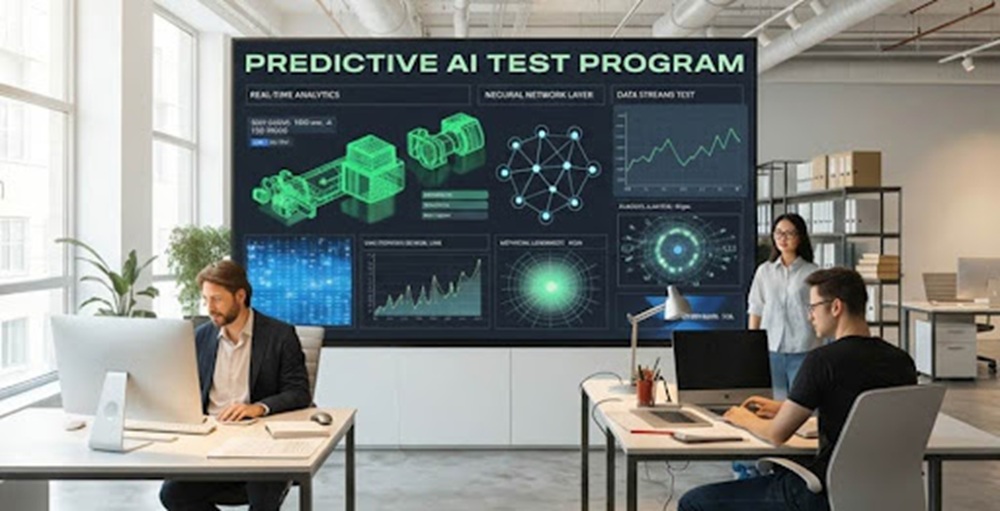
There is something about software bugs that makes them appear at precisely the wrong time.
You are in the thick of development and everything is going well. The build is good, the demo was a success, morale is high. But then an accountant hits a button no one put to the test, or a customer tries to upload a file with some odd name, and before you know it the support team is in for a long afternoon.
In a way it is like a leaky roof. Spot the problem on a clear day and you can fix it in a jiffy. Try to do it in the middle of a thunderstorm and you will have your work cut out for you.
Quality assurance has long been of the opinion that bugs are just part of the territory. The process is simple enough: automate what you can, test what you can, patch the defects and start over again. It is tried and true, but ultimately reactive.
AI is putting an end to that.
The question is no longer “Where are the bugs?” but rather “Where are they most likely to pop up next?”
That is the premise of predictive testing. With the help of AI models, you can look at historical defect data, code changes, developer activity and a host of other signals to size up the risk in an application even before you start testing. It is not magic, exactly, but it is a far smarter way to prioritize – which matters when you are shipping new software every week if not every day.
What Is Predictive Testing?
Put simply, it is the use of machine learning and analytics to gauge where new defects are likely to surface. The AI does not give every feature the same weight; it puts a probability of failure on them based on what has happened before and what is happening now.
Consider a mechanic with a car that has an odd vibration. He doesn’t need to disassemble the whole engine. Experience tells him to check the bearing or the suspension first. Years of repairs give you an intuition.
Predictive testing is the same idea, only the system is building its intuition from millions of past software changes instead of years of wrenching on cars. As you develop, the AI refines its sense of where the risk lies.
Why the Old Ways of Testing Falls Short
Software development today is fast. Between microservices, cloud-native set ups, continuous deployment and several release cycles a week, the pace has changed for most organizations.
It is not for lack of trying on the part of QA. There is just too much ground to cover.
It's that there's simply too much software to test exhaustively.
Even in an automated dev shop you run into limits:
- Thousands of automated tests increase execution time.
- Manual testing is still called for on the complex stuff.
- Regression suites get bigger with each release.
- No time for complete validation when you are under time-to-market pressure.
So you make an educated guess as to what needs the most attention.
Well, predictive testing takes the guesswork out of it.
The Data AI Uses to Predict Software Defects
Machine learning is valuable because it sees patterns we might miss. A piece of code may look fine in isolation, but put it against months of bug history, heavy developer traffic and complicated dependencies and the story is quite different.
Here is what the AI is looking at:
Historical Bug Data
Old habits die hard. If a module has been throwing up production defects in the past, the model will expect it to do so again unless the design is overhauled.
Code Churn
Some files are left alone for years. Others are being touched in every sprint. That kind of churn is usually a sign of unstable implementations or shifting requirements. It doesn’t mean there will be a bug, but the odds are better.
Code Complexity
When you have large functions and nested logic, it is harder to keep straight. The cognitive load on the developer goes up and errors follow.
Developer Activity
The AI testing models will pick up on things like a big pull request, multiple people working on the same module, or a flurry of commits right before a deadline. Not because anyone is making bad calls, but complexity is inherent in those situations.
Dependency Relationships
You can’t treat an app as an island any more. A minor tweak could have ripple effects on your APIs, databases or payment systems. AI is better at spotting those relationships than a person doing it by hand.
Testing with Priority, Not Just Volume
You could say the true power of predictive testing has nothing to do with uncovering bugs. It is in the way it steers a team’s hand when they have to make do with limited resources.
Take a release with 500 files that have been altered. The old way of doing things would be to give each one its due. But if you run the numbers through predictive analytics, you might find:
- That only 15 of those files are high risk.
- Maybe only another 60 warrant some extra regression work.
- The other 425 files represent relatively low risk.
That break-down changes everything.
It is a world of difference for the QA engineer, since really they need to focus on 75 files vs 500 files. Now manual testing can be concentrated on what is most likely to break, leaving the automated pipelines to mull over the lower-risk stuff. Your testing is targeted, not just spread out evenly.
A Case In Point

Let’s look at an online retailer gearing up for the holidays. Over a few weeks their developers have put in time on everything from inventory sync and payment processing to the recommendation engine and account management. The automated tests have all come back green; on paper the platform is ready.
At first glance, everything appears ready.
But the predictive model sees something else: a higher probability of defects in the payment service. The reason is clear enough when you look at the overlapping risk factors:
- Recent refactoring has increased the dependency interactions
- Multiple devs were working on it at once
- It has a history of production issues
- There has been a fair bit of code churn in the sprint
So rather than put it out there, the QA team does some exploratory testing.
They are not disappointed. They turn up an edge case where a discount code and a certain shipping method will cause a payment to fail intermittently. Had they not had the predictive data to nudge them in that direction, customers would have been the ones to find out.
More Than Just Bug Hunting
There are other advantages to this approach.
For one, you get faster release cycles. When you aren’t wasting time on superfluous tests, you can validate the important stuff and close out your testing window with no loss of confidence.
You also put your seasoned QA staff to better use by pointing them where they are needed most, which is far more effective than just adding headcount.
Developers get the benefit of earlier warnings that a change might need a second look, so they can be proactive about it.
And in the end you see fewer production incidents. Fewer emergency patches and support calls because you have caught the defect first. That breeds customer confidence.
Challenges Every Organization Should Know
Predictive testing is no substitute for good engineering. An AI is only as good as the data you feed it. You should count on a learning curve as the models get to know your workflow.
Common challenges include:
- Lack historical defect data
- Inconsistent bug tracking practices
- Poor commit documentation
- Lots of fast architectural changes
- False positives during the early model training
But generally, the more history you have, the more accurate the predictions become. Experience counts with any machine learning system.
How To Make It Work
The companies that see the best results don’t let predictive testing usurp their existing QA processes; they let it complement them.
Just like you want clean version control, solid CI/CD and automated regression, and regular evaluation of the testing model.
You need to think of AI as another tool in the belt of your developers and QA pros, not a replacement for human judgment.
If anything, that judgment is more important now.
Looking Ahead
We are seeing a shift in how quality assurance is approached. Rather than waiting for code to be written and then reacting to failures, teams are spotting risk as they go.
As the AI gets better, we can expect even finer detail in the future – perhaps flagging a pull request for extra unit tests or suggesting a safer deployment path based on what happened in past releases.
In the end, people write code and people err. There is always uncertainty in software development. But AI offers a data-driven means of anticipating where those errors will show up. That is an advantage you didn’t have before.
Conclusion

Don’t expect predictive testing to banish bugs altogether. That would be naive.
What it does is let you focus where it counts. By looking at the history of your code, its complexity and the activity around it, AI allows you to test with intelligence and ship with confidence.
For any business running a modern DevOps shop, it is about working smarter. Those who pair predictive analytics with a disciplined QA process will be the ones delivering quality software before the bugs can announce themselves.
Check out our article on How AI is Reinventing QA Automation
For more information on AI Testing and Automated QA for software development projects, please contact us at ScreamingBox.
Check out our Podcast on How AI Will Affect Future Business Decisions.